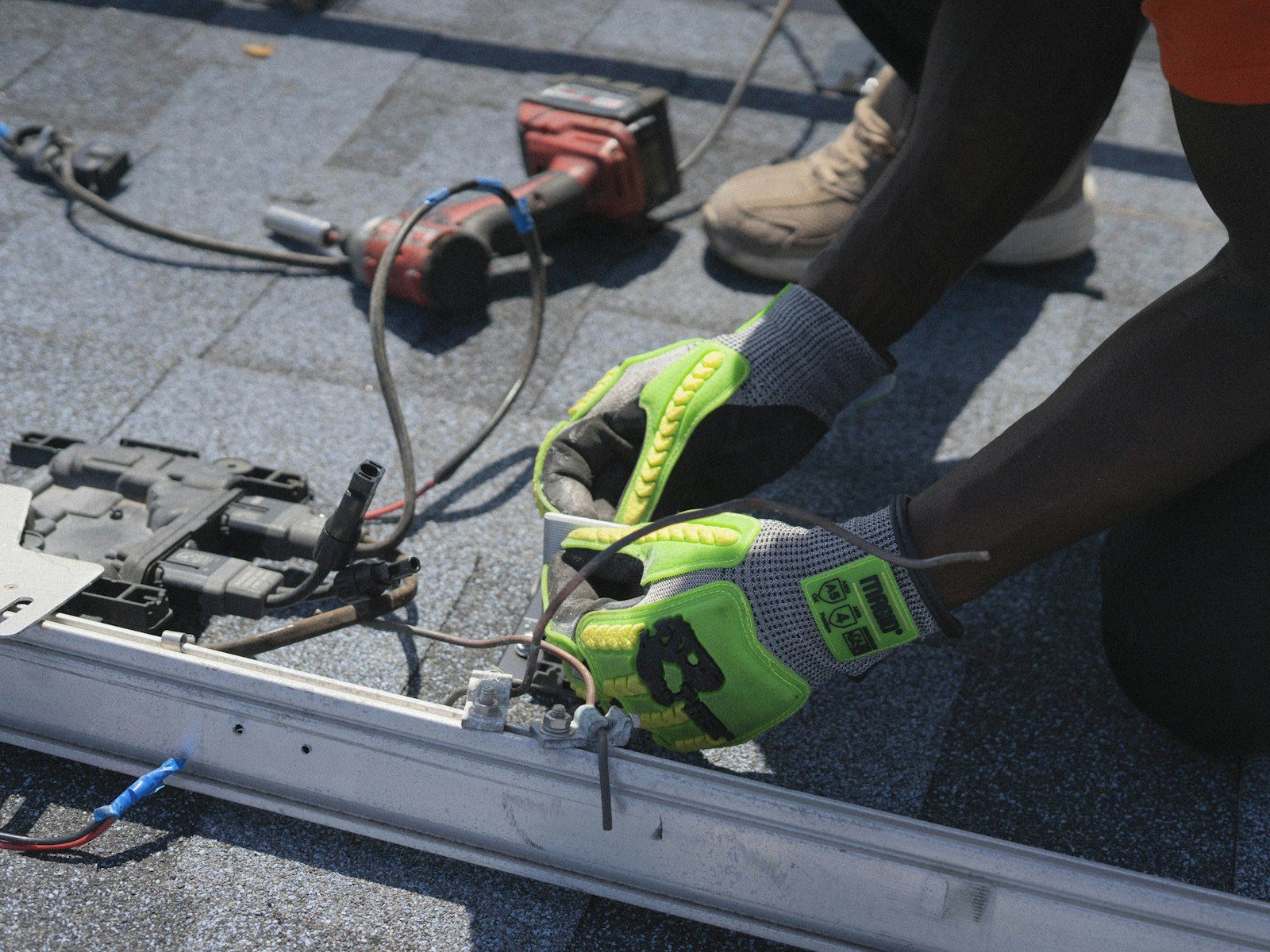
Finding where the water gets in, not where the stain shows. Leak repairs across West Hills, traced from inside the roof as well as on top of it.
Free inspection, the deck and layer count established, then a written quote.
On a tile roof, and a lot of West Hills is tile, the leak is almost never the tile. It is the underlayment beneath it, which means a roof that looks flawless from the street can be the one letting water in. Finding it means lifting tile, not walking on it.
Most Valley roofs leak for the first time in the first serious storm after a dry year, and by then the damage that let the water in has been building for several summers.
Most leak repairs in Los Angeles land between $350 and $1,500. Caught early, before the deck is wet, minor repairs start around $200 to $500. West Hills is where the relay saves the most money in this market, because it is where most of the tile is. It is also partly inside the zones CAL FIRE redrew Very High in 2025, and a Chapter 7A fire-rated assembly adds roughly $1 to $5 per square foot - about 22% - on a re-roof there.
Calling at the first stain. A leak that has not reached the sheathing is a flashing job, not a carpentry job.
Wet decking, a second story, tile that has to be lifted to reach the detail, or an out-of-hours call - emergency rates run 20 to 30% above standard.
If the same slope has been patched twice, we will say so and price the replacement instead of selling you a third patch.
Concrete tile is heavy, and the part that fails is almost never the tile. It is the underlayment beneath it, which has a far shorter life than the tile it is protecting. A roof that looks perfect from the street can be past due.
All roofing work in West HillsMost homes lost to wildfire are ignited by embers rather than the fire front, and the roof is the largest surface an ember can land on.
A Class A roof assembly carries the highest fire rating a roof can have, and in the highest-risk fire zones it is what California's wildfire building standards call for. On the hill side of the Valley it is the rating worth asking for either way.
Every slope is photographed before and after and the set is yours. Every price is against a written scope that names the detail, so the rating and the closures are on paper, not promised at the door.
Much of West Hills is newer than its neighbors, with substantial 1980s to 2000s tracts along the Valley Circle and Sherman Way corridors.
West Hills has more tile than anywhere else we work, most of it on tracts built from the 1980s on.
Newer West Hills tracts tend to have smaller low-slope areas - a porch roof, a garage, a bay - tied into a tiled main roof.
Where West Hills is shingle rather than tile it is usually the newer tracts, which means architectural laminate rather than three-tab.
Most West Hills roofs are pitched and tiled, so the low-slope requirement reaches only the additions and garages.
Bungalows and low-pitch ranch, plus butterfly roofs.
Rambling single-story ranch, long runs, wide eaves.
Post-war west Valley. Surveyed before anything is quoted.
Big lots, outbuildings, and a Very High fire zone.
The wider Valley, ranch tracts and flat additions.
City-wide, under LADBS permits and the state energy code.
The questions that decide a job, answered before you ask.
It is cheaper now than in January. A leak that has not reached the sheathing is a $200 to $500 flashing job; once the decking is wet you are into carpentry, and emergency rates in a storm run 20 to 30% above standard.
That is the most useful symptom you can give us. A roof that leaks only in driving rain is failing at an upstand or a lap that is fine under vertical water, which narrows the search a long way before anyone goes up.
Often you do not. On a tile roof the tile is usually fine and only the underlayment has failed, which is a lift and relay at roughly half the cost of replacing. If that is what your roof needs, that is what we will quote - and we will show you the felt to prove it.
In the highest-risk fire zones it is what California's wildfire building standards call for, and on the hill side of the Valley it is worth asking for either way. The quote names the rating of the whole assembly, not just the covering, plus the vent screening and the ridge and eave closures.
For a full replacement in LA County, an estimated $10,000 to $25,000 covers most houses, and repairs usually run an estimated $350 to $1,500. The honest answer is that the range is wide because pitch, access, covering and what the old roof was hiding all move it - which is why the inspection is free and the quote is written down before any work starts.
Free inspection, written quote, and we will tell you if the cheaper option is the right one.